
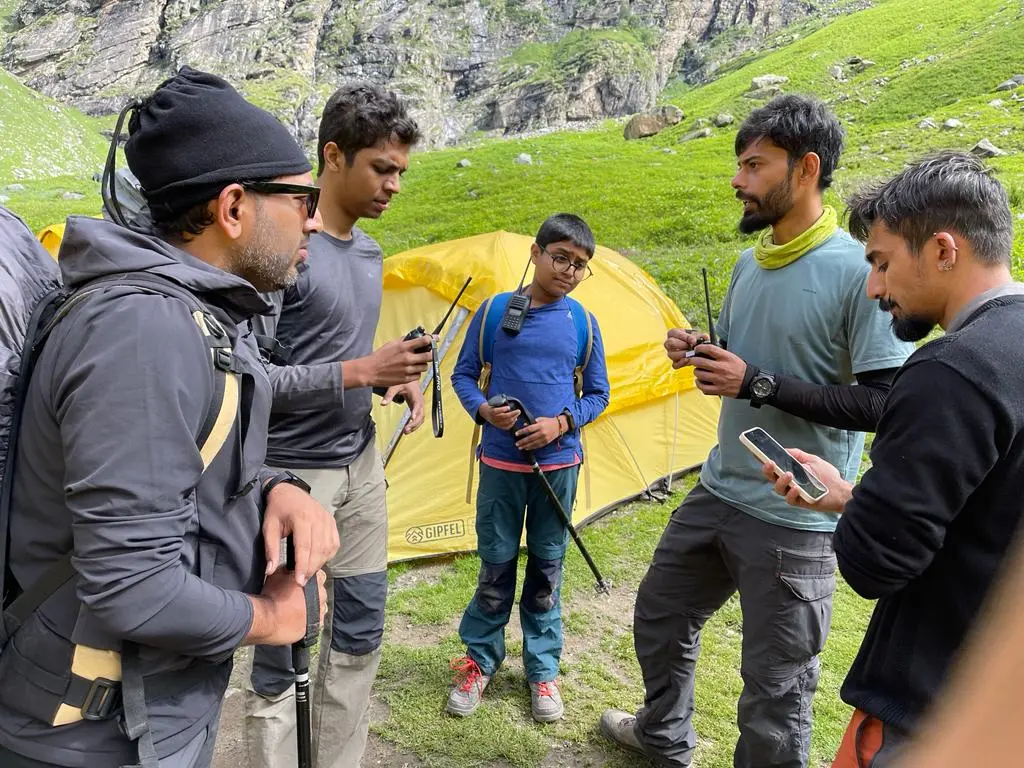
Every group journey has a person who holds it together. Someone the travellers instinctively look to when the route changes, when a question needs answering, when the energy of the group needs a gentle redirect. Most travel companies call this person a guide or a tour captain. At Komorebi, we think of them differently, and that difference is not cosmetic.
It shapes the entire quality of what happens on the road.
What a Journey Host Actually Does
A Komorebi Journey Host is not there to lecture. They are not walking alongside you with a microphone and a set of rehearsed facts about altitude and history. They are not timing your visit to a viewpoint or herding ten people back onto the vehicle so the schedule stays intact.
What they do is harder to describe but easier to feel once you are on a journey.
They hold the logistical weight of the journey so that no one else has to. Travel permits in restricted areas like Spiti and Upper Kinnaur. First aid when altitude catches someone off guard at 4,500 metres. The flat tyre on a remote Kinnaur road where the next town is an hour away. The landslide diversion that adds three hours to the day and requires a calm recalibration of what the evening will look like. All of this sits with the host, not with the travellers.
That invisible carrying of logistics is what creates the conditions for presence. When you do not have to think about what comes next, you can actually be where you are.
The Quieter Part of the Role
Beyond the logistics, a Journey Host does something that is more difficult to train for and more valuable once you have experienced it.
They read the group.
A road journey with ten people who did not know each other before day one carries its own social weather. Some mornings the conversation in the vehicle is easy and the kilometres pass without anyone noticing. Other mornings someone is processing something privately, or two people have found their rhythm together and the rest of the group is still looking for theirs.
A good host notices these things. They know when to let a meal run long because the table has found something worth staying at. They know when a sunset deserves to be sat with quietly rather than turned into an occasion. They create the conditions for an introvert to find their space and for an extrovert to find an audience, without either feeling managed.
This is what we mean when we talk about the Komorebi Effect. Not a manufactured moment. The quality of atmosphere that emerges when someone is paying careful attention to the group and shaping the pace accordingly.
Local Hosts: The Reason We Go Where We Go
Alongside the Journey Host, every Komorebi journey is woven through with Local Hosts. These are the people who are, in the most direct sense, the reason we chose a destination in the first place.
A Local Host is not a vendor or a service provider. They are the living culture of the place. The family in the Shimla hamlets whose understanding of Kathkhooni architecture comes from having grown up inside a house built that way. The Khasi elder in Mawphlung whose relationship with the sacred forest of Meghalaya is not academic but ancestral. The household in Sepi, on the West Bengal border with Nepal, where the music played after dinner has been moving between two countries for generations and does not belong entirely to either.
These are not experiences that can be found on a standard itinerary. They exist because of relationships built slowly, over multiple visits, between Komorebi and the communities that have chosen to share something of themselves with our travellers.
What a Local Host offers cannot be looked up. It is not the textbook history of a place. It is the texture of how a place actually lives, the particular taste of a Khasi thali made by someone who learned it from their mother, the rhythm of an Indo-Nepali song heard in the village where it came from, the Indo-Tibetan daily life of Spiti and Upper Kinnaur that continues on its own terms regardless of whether anyone is visiting.
When these two things come together, a Journey Host who manages the journey's structure with care, and Local Hosts who offer genuine access to a place, the travel stops being tourism in the conventional sense and becomes something closer to being a guest in someone's world.
Why the Group Size Is Part of This
None of what is described above works at scale.
A Journey Host managing twenty-five people is, by necessity, a logistics coordinator. The emotional intelligence, the reading of the group's weather, the space to let a conversation run long: all of this requires a group small enough to actually know. Ten people is that number. The host can hold all ten in view at once, not just as positions on a vehicle manifest but as people with different needs on different days.
The same is true for the access that Local Hosts provide. A family opening their home to ten travellers is an act of hospitality. The same act with twenty-five people is something else. The intimacy that makes the experience real depends on the group remaining small enough for real intimacy to exist.
For solo travellers doing this kind of journey for the first time, the group size matters in another way. Ten people is manageable. It is possible to know everyone by name within a day. There are no crowds to navigate, no anonymity to hide in or get lost in. The journey is held at a scale where everyone belongs to it, not just alongside it.
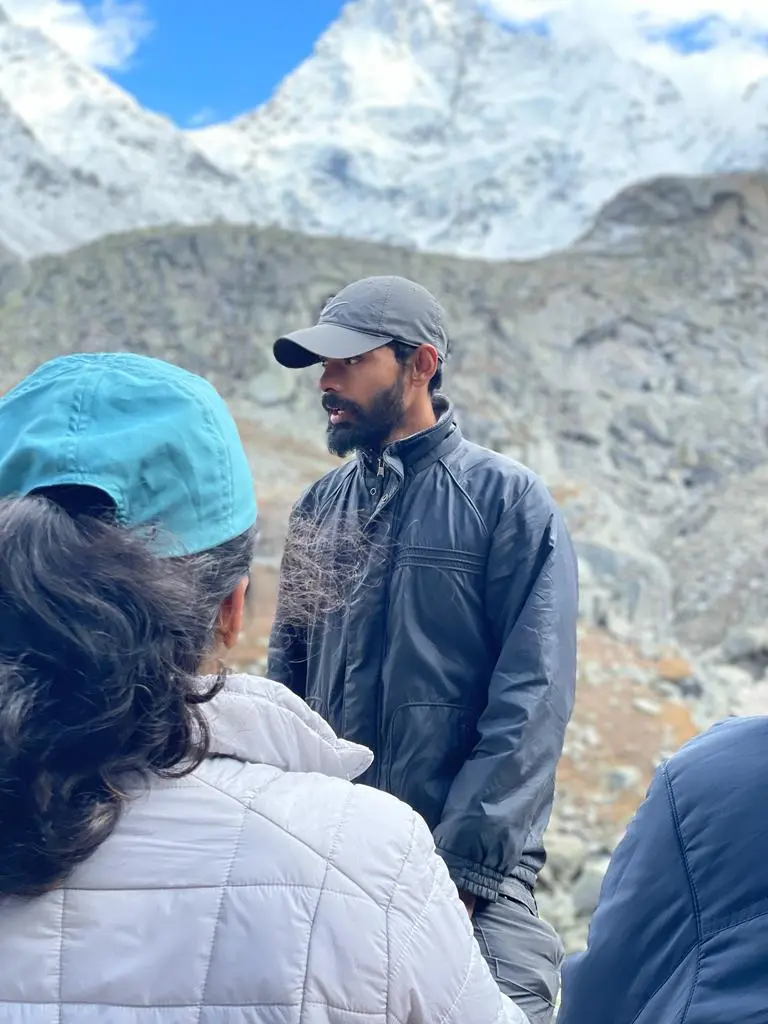
Frequently Asked Questions
How is a Komorebi Journey Host different from a standard tour guide?
A standard guide is primarily an information source and a logistics manager. A Komorebi Journey Host handles logistics, yes, but also acts as a social facilitator, reads the group's needs as they change across the journey, and creates the conditions for genuine connection between travellers and between travellers and the places they are visiting.
Who are the Local Hosts, and how are they selected?
Local Hosts are community members, families, and cultural custodians in the destinations Komorebi visits. They are chosen through relationships built over time, not through a vendor directory. The selection is based on the authenticity and depth of what they offer, not convenience or availability.
Is hosted group travel suitable for solo travellers?
Hosted small group travel is particularly well suited to solo travellers. The group is small enough to feel genuinely inclusive from the first day. Logistics, safety, and social dynamics are all held by the host, which removes the friction that can make solo group travel feel uncertain.
What destinations do Komorebi journeys cover?
Current circuits include Spiti Valley and Upper Kinnaur, the Kullu Valley and Shimla hamlets, the borderland villages of West Bengal, and Meghalaya including the Khasi sacred forests and the canyon landscapes around Laitlum and Nongjrong.
Is slow travel in these regions suitable for first-time visitors to India?
Yes. The smaller group format, the presence of a dedicated Journey Host, and the unhurried pace of the itinerary make these journeys accessible to first-time visitors. The host handles the complexity of remote travel. The traveller's only responsibility is attention.
What does "the Komorebi Effect" mean?
It is the quality of atmosphere that forms when the conditions of a journey are designed carefully enough that travellers stop managing their experience and simply have one. It is not manufactured. It is what happens when pace, group size, hosting, and place come together in the right proportions.
The Komorebi Perspective
Most travel is organised around what you will see. Komorebi is organised around what you will notice.
The distinction is in the pace, the group size, the calibre of the people holding the journey, and the relationships with the communities being visited. A Journey Host who is a trained facilitator rather than a reciter of facts. Local Hosts who are chosen because they represent the genuine cultural life of a place rather than a curated version of it for visitors.
What emerges from this, when it works, is the feeling that you did not just pass through somewhere. You were briefly part of it.
If you had to choose between a textbook history of a place and a conversation over tea with the person who has lived there for sixty years, the answer is not difficult.
Komorebi designs for the second kind of knowledge.
Komorebi is a slow-travel design studio running small group road journeys across India. All journeys include a dedicated Journey Host and curated access to Local Hosts in each region. Groups are capped at 10 travellers.