
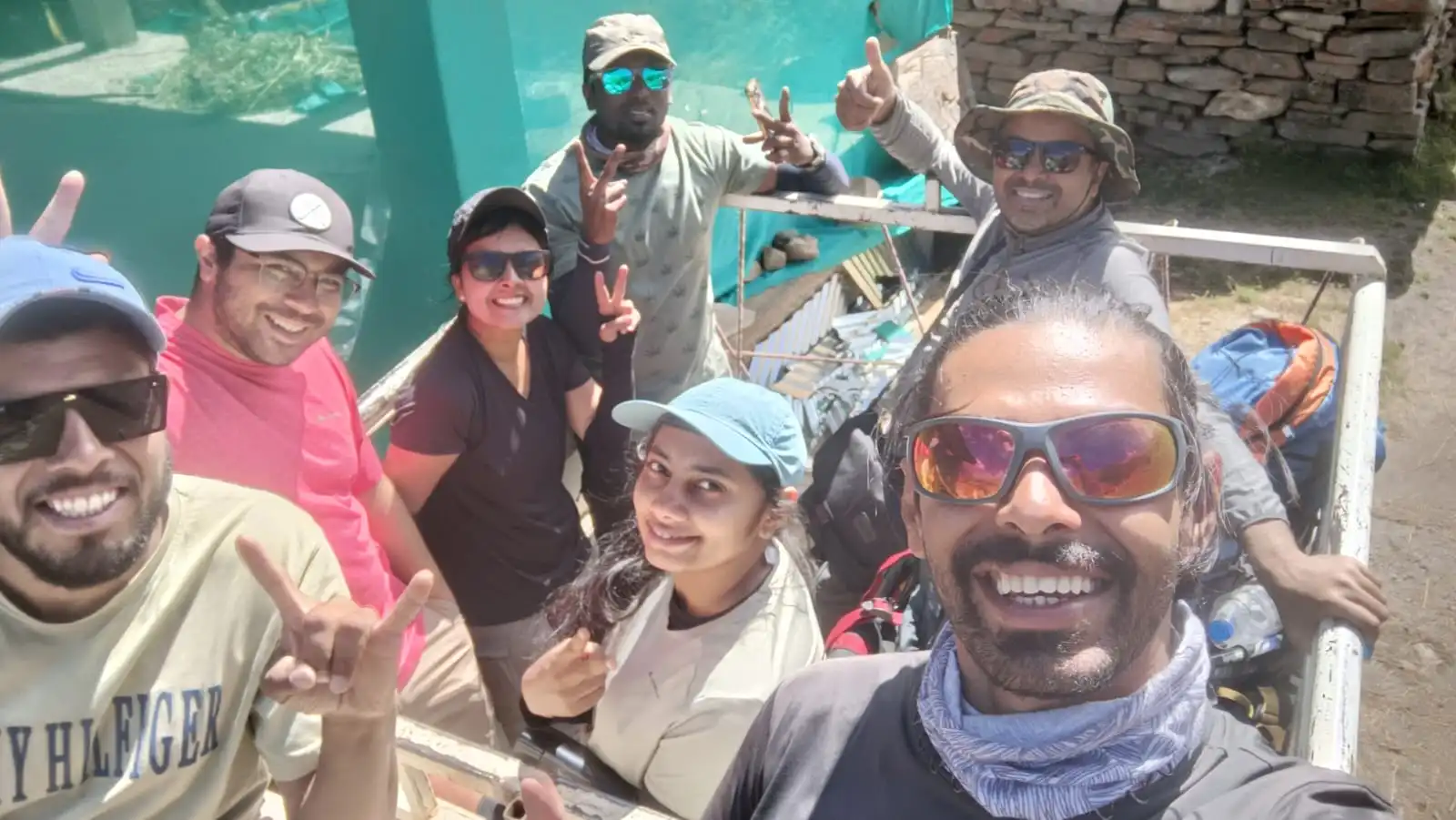
There is a particular quality to the hours spent inside a moving car in the Himalaya. The conversation drifts in and out of silence in a way that feels natural rather than awkward. Someone points at a set of prayer flags strung between two pines. Nobody says anything for a while. Then, eventually, someone does. And what gets said in those moments, between people who were strangers two days ago, tends to stay with you.
This is the kind of travel Komorebi is designed around. Not the logistics of it, though those matter. The texture of it. The way a shared road has a way of loosening people into themselves.
Which is why we are deliberate, sometimes unusually so, about who ends up in the vehicle together.
The Problem With Pre-Formed Groups in Shared Travel
Group dynamics on road journeys are not neutral. They have a social architecture, and that architecture is either designed or it happens by default. When it happens by default, it tends to favour whoever arrived with the most people.
Here is a pattern we have watched play out enough times to understand it well. A group of five friends books onto a shared road journey. They are good company, genuinely. But they arrive complete. They have their references, their rhythm, their way of moving through the world together. The other travellers, most of whom have come alone, circle the edges of that completeness for days, looking for a gap that does not quite appear.
The road passes. The landscape is beautiful. But the journey has quietly split into two parallel experiences, and the split is rarely repaired.
We call this the Group Within a Group problem. It is not dramatic. It requires no conflict and no bad intentions. It is simply what happens when a pre-formed social unit is large enough to be self-sustaining inside a shared space. The others become, in a quiet way, background.
Komorebi approaches its journeys as living social landscapes, not transport arrangements. The way the group constitutes itself is as much a part of the design as the route.
Who Our Travellers Actually Are
The majority of people who travel with Komorebi come alone.
Not because they lack people to travel with, but because they have arrived at the kind of curiosity that is harder to satisfy with a familiar group. They want the Spiti Valley to be genuinely new. They want the borderlands of West Bengal to catch them off guard. They want the kind of conversation that only happens between people who have no shared history yet, and are therefore not performing a version of themselves that already exists.
Solo travel in India, done this way, through remote roads and unhurried villages, asks something of you. It asks you to be present without the insulation of the known. Most of our travellers find that prospect interesting rather than frightening. But they still arrive with a quiet hope: that the group will be one worth arriving into.
That hope is something we take seriously.
The Ten-Seat Design
Every Komorebi road journey runs with a maximum of ten travellers.
At ten, the group is small enough to stop at a dhaba on a bend that nobody had planned. Small enough that a wrong turn into an unscheduled village becomes a shared story rather than a delay. Small enough that when the convoy pulls over somewhere above the Spiti Valley and the light is doing the thing it does at that altitude in late afternoon, the silence that follows is something all ten people can actually share.
The places Komorebi moves through are not built for larger numbers. The old quarters of Shimla's quieter neighbourhoods. The high-altitude stretches of Upper Kinnaur where the road narrows and the valley drops away. The border villages of West Bengal where the culture shifts in ways that require you to slow down enough to notice. These landscapes reward a certain quality of attention. Ten people can carry that quality together. More than that and the attention tends to fragment.
There is also a practical tenderness to small groups on long drives. You learn people's names. You notice when someone has gone quiet. You share the front seat and the back seat and the middle of the night when someone's flashlight dies at a homestay and the whole car finds this funnier than it should.
That texture does not scale.
Why We Cap Bookings at Three
This is the part of our policy that raises the most questions, and rightly so.
You can book a Komorebi road journey as a solo traveller, as a pair, or as a group of three. We do not take bookings for four or more people travelling together.
The reasoning is unglamorous but honest. Three people do not have the social mass to become self-contained inside a larger group. They arrive with some familiarity between them, enough to feel comfortable, but not enough to stop needing the group around them. That gap is the thing. It is what keeps them curious about the other seven. It is what keeps the whole group porous and open to each other.
Four people can close that gap. Five people almost always do. The group-within-a-group dynamic does not require malice or even intention. It simply requires enough people to form a complete social world, and four is often enough for that to happen.
Three is the last number before the door swings shut.
What Happens When No One Has Enough People to Dominate
When every small group arrives below that threshold, the social field of the journey levels itself.
Nobody has the gravitational pull to set the tone for everyone else. The solo travellers are not outnumbered by a pre-formed clique. The pairs and trios are not insulated enough to stay sealed. What tends to emerge, by the second or third day of driving together, is something closer to a collective. Not performed community. The quieter kind, the kind that forms when people stop needing to manage their position and start simply being somewhere together.
The Direction of Attention
There is something else the three-person limit does, which is harder to name but easy to feel.
When you arrive somewhere as part of a large familiar group, your world points inward. The conversations, the references, the comfortable silences: they all belong to what already exists between you. The landscape outside the window becomes something you observe together rather than something you enter.
When your social world is smaller, or newer, the destination pulls you outward instead. The handwritten signs at a tea stall in Meghalaya. The way the road surface changes at the edge of Spiti. A meal that arrives without being ordered at a homestay run by someone's grandmother, and the conversation that follows in three languages and a lot of pointing. These become the shared language of the journey. The group builds its references in real time, from the road itself.
That is the experience Komorebi is designed to protect.
A Note on Solo Women Travellers and First-Time Explorers
Komorebi has always been a space where solo women travellers feel genuinely settled, not just tolerated. This is not a marketing position. It is a design one.
The social dynamics created by large pre-formed groups can be particularly wearing for women travelling alone. Not always. Not dramatically. But the quiet work of finding your place in a group where the pecking order has already been established before you arrived is real work, and it should not be part of the experience.
The booking policy described above removes that particular friction. When no one group is large enough to have established its authority over the social atmosphere, the field is open. Everyone is finding their footing at roughly the same pace. That pace is kinder.
The same is true for travellers who have never done shared group travel before. The first day of a road journey with strangers carries its own low-level uncertainty. That uncertainty resolves itself much faster when the social terrain is level from the start.
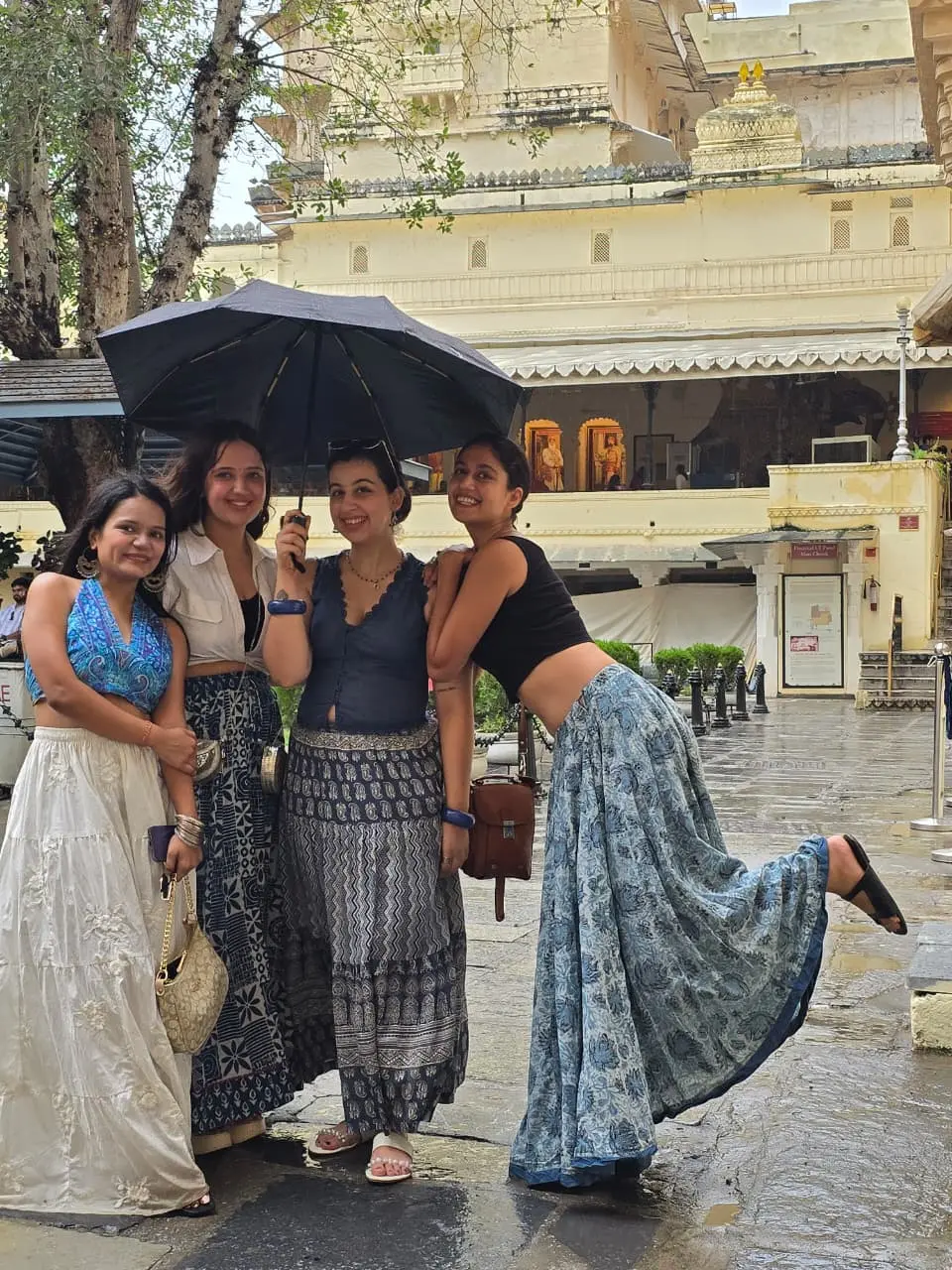
The Komorebi Perspective
We did not arrive at this policy through theory. We arrived at it by paying attention to what actually happens on long drives through unfamiliar landscapes when the conditions are right.
The right conditions are not simply beautiful roads, though the roads matter. They are not simply interesting destinations, though those matter too. They are the conditions under which people feel free to be genuinely curious, about the place and about each other. Conditions where the journey does not feel like something being organised for you, but something being discovered by you, alongside people who are discovering it at the same time.
Komorebi approaches each journey as a living landscape. The social design of the group is part of that landscape. So is the pace, the route, the choice of where to stop and where to keep driving.
When you book with Komorebi, you are not purchasing a seat in a vehicle. You are stepping into something that has been thought about carefully, in ways that are not always visible but are present in everything that happens from the moment the convoy begins.
Frequently Asked Questions
Are small group road journeys suited to slow travel?
Yes. Small group road journeys with a cap of ten travellers are well suited to an unhurried pace. There is no crowd to keep moving, no schedule that cannot flex for an unexpected stop. The format is built for the kind of travel that stays with you.
What is the ideal duration for a Komorebi road journey?
Most Komorebi circuits run between eight and twelve days. This is enough time for the group to find its rhythm and for the landscape to register properly rather than passing in a blur.
Are Komorebi group journeys crowded?
The group is capped at ten travellers. The destinations are chosen specifically because they sit outside the circuits of mass tourism. Both of these are deliberate.
Are boutique and homestay accommodations included?
Komorebi prioritises cosy, comfortable homestays and small heritage properties in each region. The accommodation is chosen to suit the character of the place, not the category.
Are Komorebi journeys suitable for solo women travellers?
Yes. The group size and booking policy are both designed with solo travellers, including women travelling alone, in mind. The social environment that results tends to feel settled and genuinely welcoming from early on in the journey.
Can I book as a solo traveller even if I do not know anyone else on the journey?
Yes, and most of our travellers do exactly this. The structure of the group is designed to make that experience feel natural rather than awkward.
The social field of a road journey is either designed or it happens by default. Komorebi designs it.
Komorebi is a slow-travel design studio running small group road journeys across India. Groups are capped at 10 travellers. Bookings are accepted for solo travellers, pairs, and groups of three.