
Vietnam does not just get warmer as you move south, the culture shifts as well. The French rule left its mark here more visibly than in the north, and you can feel a different feeling in the south. A stronger pull toward commerce, and a denser Catholic population owes itself to one of the country's largest internal migrations, when close to a million Northern Vietnamese Catholics moved south. That history sits underneath everything in this stretch of the country: Ho Chi Minh City, Da Lat, and Mui Ne, the three stops most worth building a southern route around, and the two of which, Da Lat and Mui Ne, most Indian operators quietly drop to fit the whole country into seven or eight days.
After more than a month exploring the north and the centre, Udisha went off to explore Cat Ba Island on her own, and I had to return to hosting groups. Everything in this piece comes from my time in the south as a tourist, not a traveller, and I think that distinction is worth sitting with before we go further.
The Traveller and the Tourist
The biggest difference between the two, in my experience, is what each is actually looking for. A traveller wants something raw and unfiltered. A tourist is often handed a skimmed version, the surface of a place rather than its texture. Most organised tours settle for that surface, and Ho Chi Minh City usually gets reduced to Bui Vien Street, a nightclub or two, a river cruise, and a day trip to the Cu Chi Tunnels. It is more than that, even seen the way I saw it.
Ho Chi Minh City, More Than Bui Vien Street
Ho Chi Minh City, still called Saigon by plenty of locals, is the country's economic centre. It was renamed after Ho Chi Minh, the revolutionary leader and first president of North Vietnam. Fly in and you will likely land to a recording playing over the airport speakers, the one everyone just refers to as “Ho Ho Ho Chi Minh,” after its chorus. Compared to the north and the centre, this city does not slow down. Glass towers, five-star hotels, and restaurants cluster around institutions that clearly do not close early.
The Post Office, and Two Bullet Shells I Couldn't Take Home
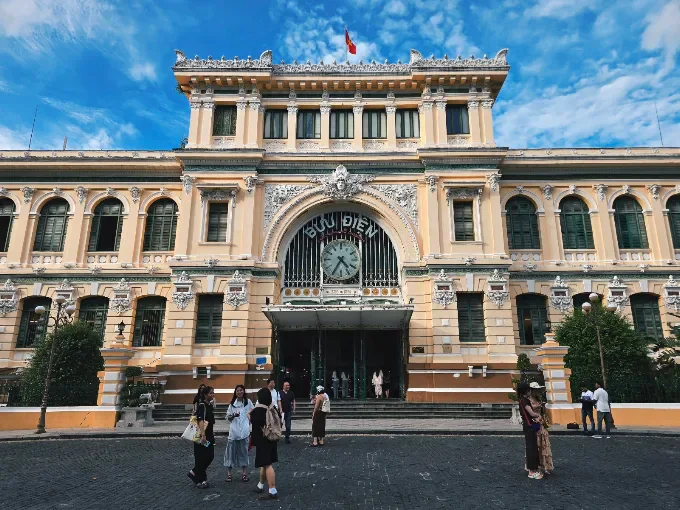
I was lucky enough to get a full day free to explore the city on my own. I used most of it visiting the Saigon Central Post Office and a handful of hotels, building out the ground network. On one of the trips I was hosting, I picked up two empty AK-47 shell casings from the shooting range at Cu Chi Tunnels, meaning to carry them home as souvenirs. Every airline and courier service I checked prohibits carrying even empty casings, so they never made it past the counter. Worth knowing before you get anything like it yourself.
Dinner on the Saigon River
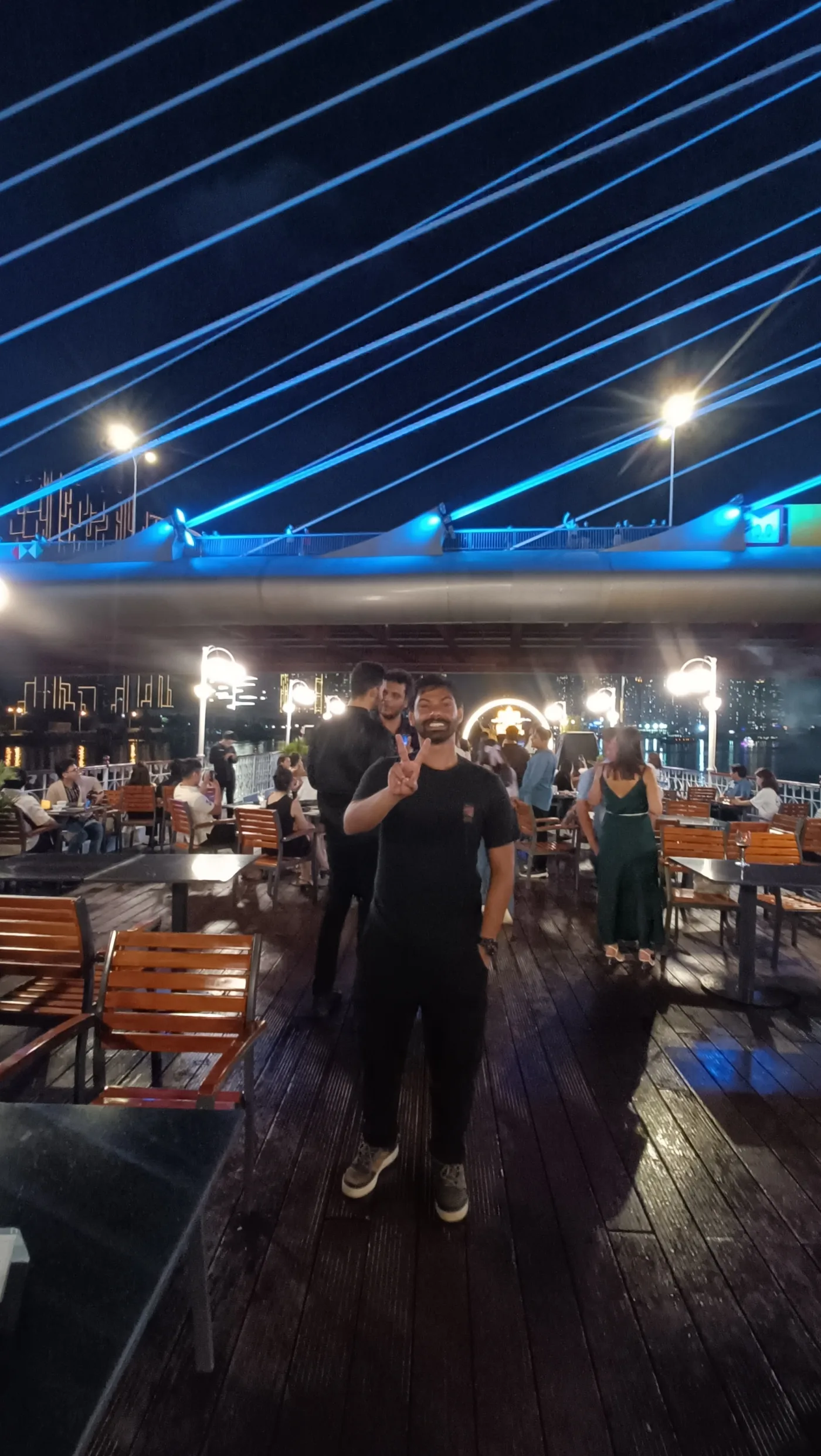
One of the details from that trip that stayed with me was the Saigon River Dinner Cruise. It is built to show you Vietnamese cuisine the way fine dining plates it, and street pho, banh mi, and mi quang are still the better way into the food, but the occasional dressed-up dinner does not hurt. Live music runs through the evening, usually turning into something closer to a party once the right crowd settles in. The singer on these cruises switches fluently between languages depending on who she spotted in the room, and on us, she went straight for “Made in India” by Alisha Chinai. All of it happens against a backdrop of the skyline lit up along the river, close enough to a light show that my guests who have also done Chicago's architecture cruise still bring up the comparison.
Cu Chi Tunnels
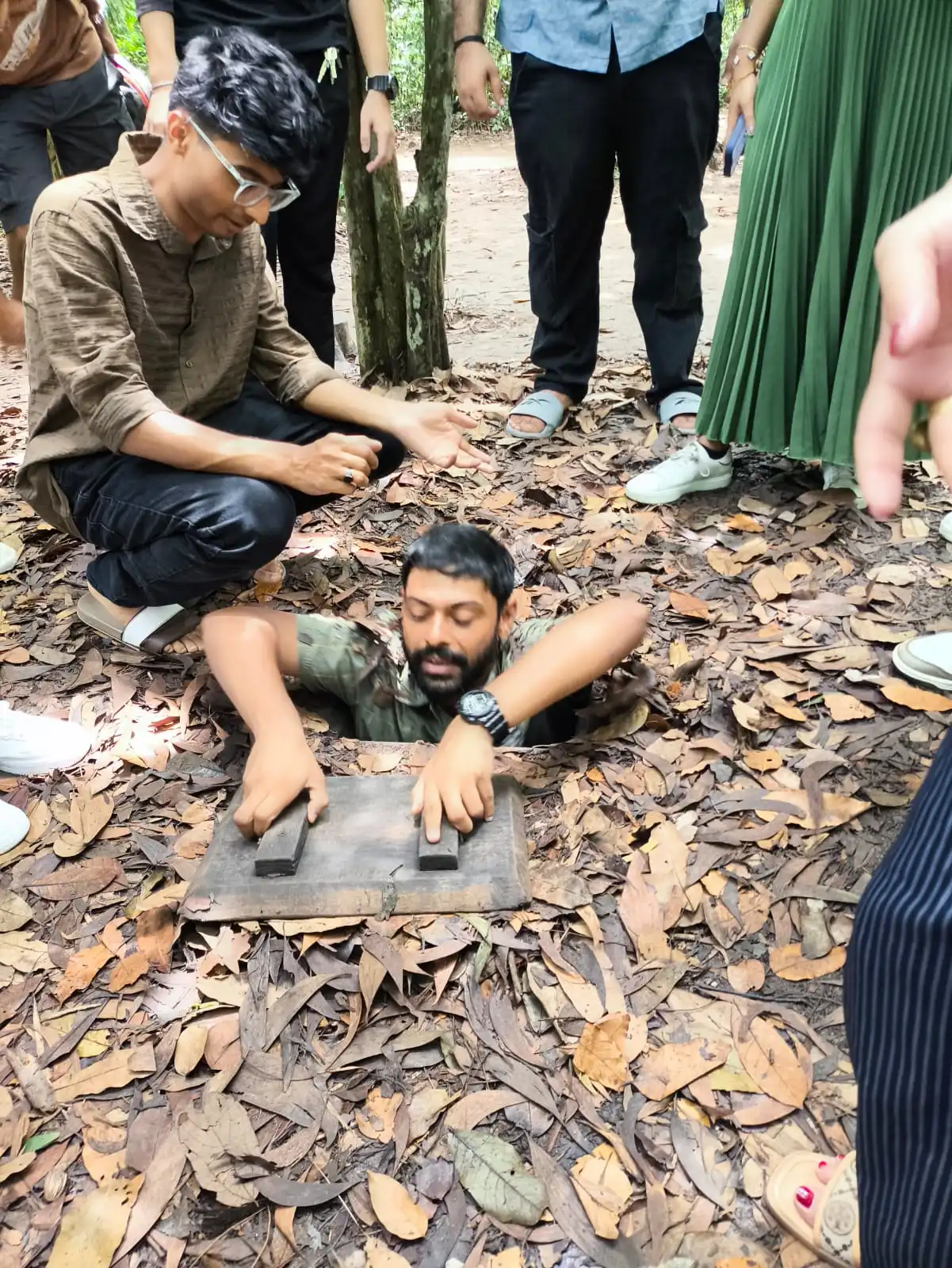
Cu Chi Tunnels sits about two hours outside the city, and every visit runs on a guide, two to three hours depending on how long you linger at each stop. The site mixes hands-on demonstrations, trap mechanisms, and tunnel sections you crawl through yourself, with enough context to understand how these tunnels were first used against the French and later by the Viet Cong against the Americans. I do not think the experience is lesser for being guided and packaged. It was the version I had access to, and it still left an impression.
The Mekong Delta, and a Tip I Picked Up Between Groups
If you have a spare day in Ho Chi Minh City, the Mekong Delta is worth it, island hopping by boat and a stop at Vinh Trang Pagoda. I never made it there myself. This one came from the hostel staff and friends I stayed with and made in between hosting groups, the kind of tip that only surfaces when you are around long enough to ask.
The Two Cities Most Itineraries Skip
Mui Ne and Da Lat rarely make it onto an Indian operator's map, mostly because fitting the whole country into seven or eight days leaves no room for either. I would still make a case for both.
Mui Ne is a beach town and is one of Asia's better spots to learn kitesurfing, with schools lined up along the coast at reasonable rates. Between sessions, the sunsets are some of the best on this stretch of coast, and the white sand dunes nearby, oddly close to the sea, are worth an afternoon of quad biking. Getting there from Ho Chi Minh City means a bus or train to Phan Thiet, followed by a pre-arranged pickup for the last stretch, about four and a half hours door to door.
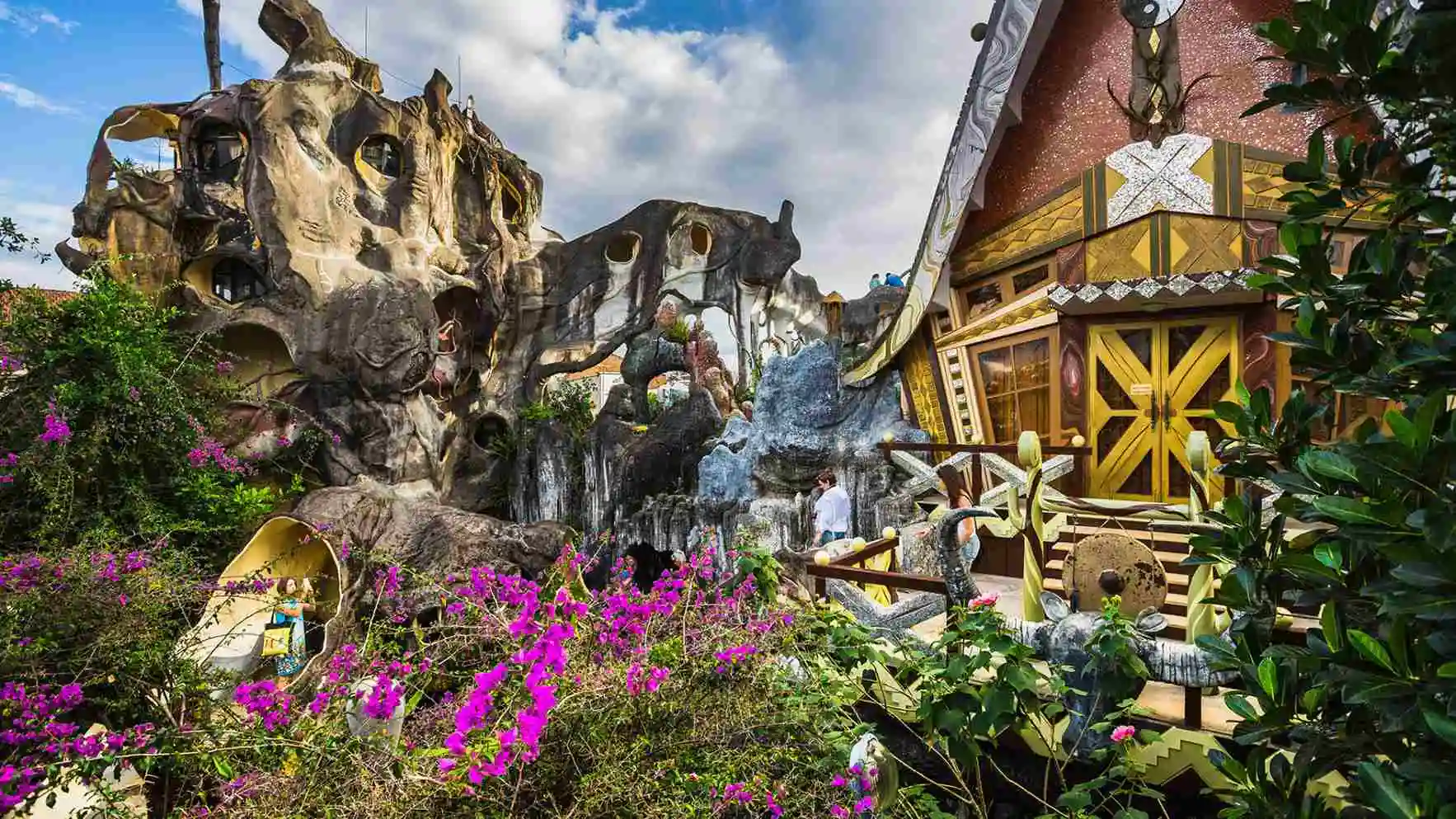
Da Lat sits a little outside the strict boundary of the south, but it works as the transition point into it, the bridge from the centre's climate to the south's. Locals call it the City of Eternal Spring, and it earns the name: cooler air, a lake the town spirals around, pine forest on the edges, and a run of oddly charming architecture, the Crazy House being among them. It is a good pause for anyone backpacking through, with cycling routes and forest hikes that ask nothing more of you than the wish to be there. One route worth considering: fly, bus, or train from Da Nang to Da Lat, then continue down to Ho Chi Minh City, using Da Lat as the hinge between the centre and the south.
Komorebi Perspective
Across all three of these pieces, north, centre, and south, the same pattern kept showing up: the places most worth visiting are often the ones most itineraries cut first, usually for reasons of time rather than merit. Komorebi's Vietnam routes started from that exact frustration, wanting people to actually get close to the country rather than skim it, in a place that is still affordable enough to hold both the luxury and the raw experience without forcing a choice between them. If you want a version of this route built around what you actually want out of it, that is the conversation we would want to have with you.
Practical Details
December to April is the dry season across the south, cooler, clearer, and the best window for both Ho Chi Minh City and the beaches at Mui Ne. May through November brings the rains, usually short, heavy afternoon downpours rather than washed-out days, but worth planning around anyway.
Tan Son Nhat International Airport in Ho Chi Minh City is the main southern gateway, with reasonable connections from India. Da Lat has its own airport, Lien Khuong, if you are routing in from Da Nang or elsewhere in the centre.
Ho Chi Minh City works well as a base for two to three nights, close to the Cu Chi Tunnels and Mekong Delta day trips. Mui Ne suits a couple of nights by the coast, and Da Lat rewards at least one night given how different the air feels once you are up there.
Five to seven days covers Ho Chi Minh City, Mui Ne, and Da Lat without rushing. Most groups I have hosted get two days here, folded into a longer country loop, enough for the city and Cu Chi Tunnels, not much beyond that.
Da Lat sits at roughly 1,500 metres, so evenings run cool even though the rest of the south stays warm. Pack a layer if you are heading up from the coast.
Frequently Asked Questions
Is Southern Vietnam suitable for slow travel?
Yes, though it asks more of you to seek it out here. Ho Chi Minh City moves fast by design, but Da Lat and Mui Ne both reward slowing down once you reach them.
What is the ideal duration?
Five to seven days for the south on its own. Most of my groups only get two days here as part of a longer loop, enough for the city, not much else.
Is Southern Vietnam crowded?
Ho Chi Minh City and the main Cu Chi Tunnels routes get busy, especially around Tet in late January or February. Da Lat and Mui Ne thin out considerably outside weekends.
Are boutique or community stays available?
Yes. Ho Chi Minh City has everything from hostels to five-star properties, and Da Lat in particular has a strong run of boutique stays given its cooler climate.
Is it suitable for solo travellers?
Very much so, particularly around Ho Chi Minh City's hostel scene, though I would still recommend a guide for Cu Chi Tunnels rather than going in blind.
Can Cu Chi Tunnels be done as a day trip?
Yes, and most visits are. Budget about two hours each way and two to three hours on site, comfortably doable within a single day from the city.
In the end, only the shell casings got left behind. Everything else I actually saw made it home with me.
Komorebi designs thoughtfully paced, culture-first road trip circuits, built around this same idea: enough time to feel a place, not just pass through it.