
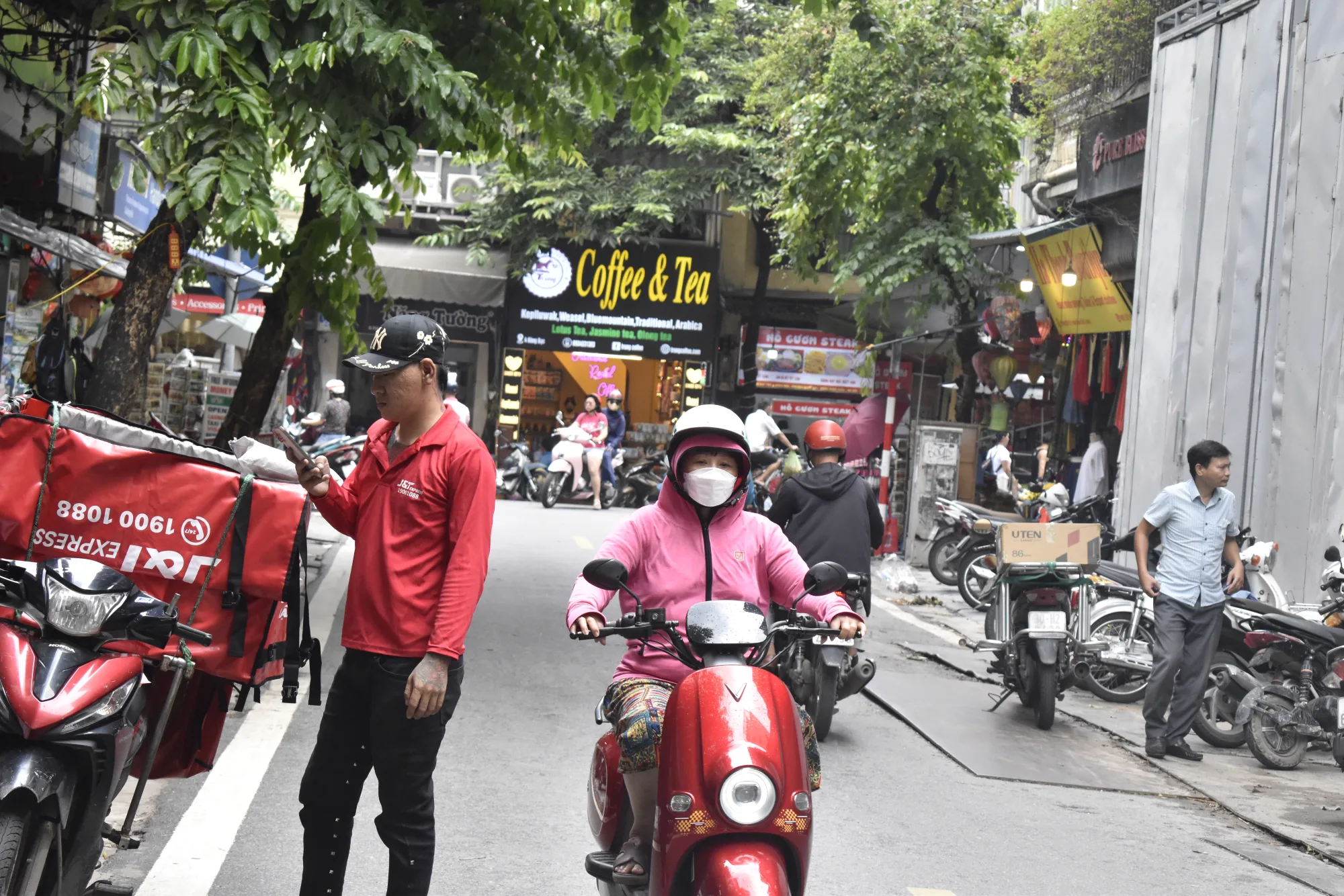
Vietnam holds a very special place for me. Coming from humble roots, I never thought I would visit a foreign country, let alone book a flight to another while still being in Indonesia. It started in Ubud, Bali, on a call with Udisha. On impulse, we ended up booking two tickets to Hanoi. A few weeks later, back in India, I applied for a month's leave. We started from Delhi and landed at Noi Bai International Airport. Thirty minutes through immigration and we were out.
I am one of the few people who have seen Vietnam from two very different angles. The first: hostels, overnight buses, low plastic stools, eating shoulder to shoulder with strangers. The second: five-star boutique hotels, flights between cities, private guides to Ha Long Bay and Ba Na Hills. Same country. Entirely different worlds.
Walking the streets of Hanoi, Hoi An, and Sapa, I kept coming back to the same thought Anthony Bourdain travelled with. "This is a place best understood at a low plastic table and a stool". Sitting shoulder to shoulder with locals, not just eating pho but bun cha, mi quang, snails and clams. Cheap Hanoi beer in tin cans, everyone around the table chanting "Mot, hai, ba, dzo!"
That trip turned into several. I have since walked this same Northern Vietnam circuit more than once, first as a backpacker on hostel budgets and overnight buses, later as someone leading small groups through Hanoi and Ha Long Bay, the two days the north usually gets on an eight-day loop through Vietnam, north to south. Sapa and Ninh Binh, the parts I got to linger in, stayed mine alone. What follows is the route I would send you on if you asked, and the reasons why.
Just outside the exit, there are stalls selling SIM cards. Pick one up immediately so you can book a Grab to the Old Quarter or wherever your accommodation is booked. It is said, Vietnam has more bikes than people and outside the airport you will find plenty of riders holding up Grab green colour boards. Book your transport only through the mobile app if you are going by yourself or if your provider has not arranged an airport pickup. Forty minutes later we reached our hostel and learned quickly that Vietnam is serious about time. Two in the afternoon means check-in. Twelve noon means check-out. No negotiation.
Hanoi
Mornings started with banh mi and iced coffee so strong you begin to understand how the Vietnamese resisted both the French and the Americans. Afternoons were warm and slow in mid-July, spent looking for something cold and refreshing. By evening, the street lights came on and tables spilled onto the roads. Every corner had boiled snails and clams, the best possible excuse to keep drinking. Dinner was pho, egg rolls, and "French fried." That is not a typo. You will understand when you go.
Beyond the food, Hanoi was long walks around Hoan Kiem Lake and the Old Quarter, small temples, conversations with locals, Circle K runs, bargaining for football jerseys, and pool in whatever bar we ended up in that night.
Sapa
From Hanoi, you can take a bus to Sapa or an overnight train. Sapa is for rice terraces and jungle hikes, the kind of place locals escape to when Hanoi gets too loud. The overall food and our schedule stayed the same, the experiences where we stayed, changed. We got lucky and stumbled onto a group of locals who took us to a joint where beer came from a petrol dispenser, served by the jug. We played with our homestay owner's dog Milk, a pit-bull crossbreed, and their kid, before moving on to Ninh Binh, where we stayed for five days.

Ninh Binh
Ninh Binh was mostly the people at the hostel, table tennis, 8 ball pool, swimming pool games and the Tam Coc boat rides. Lots of friends, lots of games. One afternoon, doing something properly touristy for once, my debit card slipped into the Tam Coc river. I dived in and got it back. When I surfaced through the murky green water, three or four boats had gathered and the passengers were clapping. Our boat owner looked at me like I had just cleared the top rated government exam.
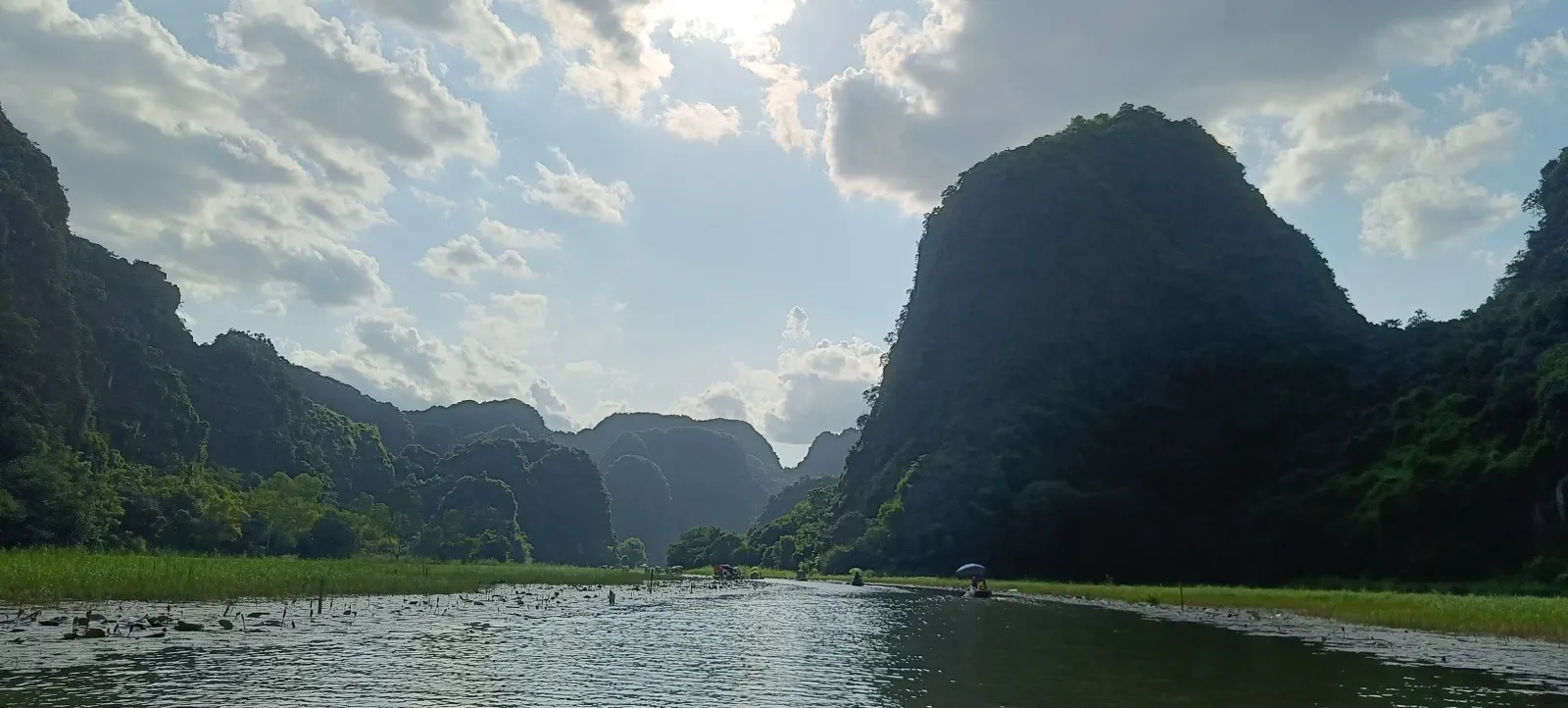
That was my North Vietnam as a traveller.
The Traveller and the Tourist
It was a different story entirely when my groups started arriving on their eight-day loops through the country, two days in the north, three through the centre, two down south. Everyone came with a full itinerary and genuine enthusiasm to see it all. Most never had the energy to experience any of it, and the north, being the opening leg, took the worst of it.
After a four-hour flight, straight to Train Street for the 7 PM train, then dinner, then a night out. That is a rough way to start a trip. When the first day is that compressed, you never quite recover. Two days in the north leaves no room for lunch, let alone a second bowl of pho because you feel like it, or an unplanned stop at a temple because something about it made you slow down.
The difference was sharpest on Ha Long Bay. The cruise was genuinely beautiful. Visiting the place where Kong: Skull Island was shot still makes me feel lucky to have been there. The stalactite and stalagmite formations in Sung Sot Cave, football on the beach at Titop Island, the view from the top and the light going down over the bay. But most of my guests never made it off the cruise. They were exhausted. Not because they lacked the will, but because no one had given them space to rest before asking them to explore.

Komorebi Perspective
I do not think there is a wrong way to travel. People have different needs and that is fine. But there is something lost when an itinerary leaves no room to breathe, when ten experiences are squeezed into five days and sold as a complete trip. Showing a lot and letting someone actually feel a place are two different things. The best trips I have been on, and the ones I try to build at Komorebi, have one thing in common: enough time. Time to get lost, to rest, to go back somewhere you liked, to do nothing on purpose. That is not a luxury. That is the whole point. It is the same idea behind every circuit we design: a region is a living landscape, not a checklist.
Practical Details
If you are planning this yourself, here is what I would tell a friend over the same call I once had in Ubud.
I went in mid-July and spent most afternoons hunting for shade, so take it from me, March to April or September to November is kinder. Skies stay clear over Sapa's terraces, and Ha Long Bay is far less likely to cancel on you. July and August bring typhoons that can ground a cruise with little warning. Winter turns Sapa properly cold, sometimes down to a light frost, so pack for it even if Hanoi still feels mild.
Noi Bai International Airport outside Hanoi is where nearly every route into the north begins. There is no direct flight from India, so expect a connection through a regional hub. Grab the SIM card the moment you clear immigration, everything after that runs through your phone.
The Old Quarter works for both budgets, hostels down one lane and quiet boutique stays down the next. In Sapa and Ninh Binh, a homestay will get you closer to the place than any hotel will, ours came with a dog and a kid who adopted us for the week. Ha Long Bay is best done as an overnight cruise rather than a day trip.
I would build in ten to fourteen days for the full loop, Hanoi, Sapa, Ninh Binh, and Ha Long Bay, with at least one day that has nothing planned on it. Most of my groups only ever got two days here, folded into a longer eight-day loop through the rest of Vietnam, and two is really the bare minimum, enough for Hanoi and Ha Long Bay, not much beyond that.
Sapa sits at roughly 1,500 metres, so the cold arrives most evenings regardless of season. Bring layers even in summer. Ha Long Bay sailings are weather dependent, build a spare day around that leg if you can.
Frequently Asked Questions
Is Northern Vietnam suitable for slow travel?
Yes. Northern Vietnam rewards slow travel more than most places I have travelled. Hanoi, Sapa, Ninh Binh and Ha Long Bay sit close enough together that slowing down does not cost you ground, only the rush.
How many days do you need for a Northern Vietnam itinerary?
Ten to fourteen days covers Hanoi, Sapa, Ninh Binh and Ha Long Bay at a pace you can actually feel. If you are folding the north into a wider Vietnam trip, two days is the minimum I have seen work, and even then it only stretches to Hanoi and Ha Long Bay, with no room for the unplanned stop that usually ends up being the best part.
What is the best time to visit Northern Vietnam?
March to April or September to November. Skies stay clear over Sapa's rice terraces and Ha Long Bay cruises are far less likely to cancel. July and August bring typhoons that can ground a sailing with little warning, and winter turns Sapa properly cold, sometimes down to a light frost.
How crowded are Hanoi, Sapa, Ninh Binh and Ha Long Bay?
Hanoi's Old Quarter and the main Ha Long Bay cruise routes get busy, especially September to November. Sapa and Ninh Binh quiet down fast once you move past the first viewpoint.
Are there homestays or boutique stays in Northern Vietnam?
Yes. Homestays in Sapa and Ninh Binh, boutique hotels in Hanoi's Old Quarter, and overnight cruise cabins on Ha Long Bay. I have stayed in both kinds and would recommend either, depending on what kind of trip you are having.
Is Northern Vietnam good for solo travellers?
Very much so. The hostel circuit in Hanoi and Ninh Binh makes it easy to fall in with strangers for a few days, which is how half of my own stories from there happened.
Do I need to trek to enjoy Sapa?
No. Light walking is enough to take in Sapa's rice terraces and the cold mountain air. Longer treks are there if you want them, we did not always take them.
The rice terraces look the same whether you see them from a bus window at speed or from a homestay porch with nowhere else to be that morning. Only one of those ways lets you actually hear the wind move through them.
Komorebi designs thoughtfully paced, culture-first road trip circuits, built around this same idea: enough time to feel a place, not just pass through it.
Continue south with our Central Vietnam itinerary.